Imagine a world where learning feels like play and every day is an adventure. Welcome to the Montessori home school curriculum, where kids aren’t just students—they’re explorers, innovators, and future leaders. This approach transforms the traditional classroom into a vibrant learning environment right in the comfort of home.
With hands-on activities and self-directed learning, children dive into subjects that spark their curiosity. Forget the boring lectures and endless worksheets; Montessori encourages kids to discover knowledge at their own pace. It’s like giving them a treasure map to education, where they choose their own path to success.
Overview of Montessori Home School Curriculum
Montessori home school curriculum emphasizes child-led learning and development. Children engage in hands-on activities that promote exploration and creativity. The curriculum covers four primary areas: practical life, sensorial, math, and language.
Practical life activities encourage independence and self-discipline. Tasks may include pouring, sweeping, and gardening. These tasks help children develop fine motor skills and everyday life skills.
Sensorial materials aid in refining a child’s senses. Items such as color tablets and sound boxes enhance the ability to differentiate between textures, sounds, and scents. These activities foster observation skills and cognitive development.
Mathematical concepts introduce numbers through interactive materials. Children may use counting beads and number rods to explore quantities and relationships. This tactile experience builds a strong foundation in mathematics.
Language development is multifaceted in the Montessori approach. Materials like moveable alphabets and storytelling aids promote literacy. Reading, writing, and oral skills enhance vocabulary and comprehension.
The curriculum encourages mixed-age group interaction, providing peer-to-peer learning opportunities. Younger children benefit from observing older peers, while older children reinforce their knowledge through teaching. This collaborative environment fosters social skills and confidence.
Montessori home school curriculum adapts to each child’s unique learning pace. Learning plans evolve based on interests and developmental stages. This personalized approach cultivates a love for learning, creating lifelong learners ready to explore the world.
Parents can incorporate the Montessori philosophy at home through structured environments and engaging materials. Resources such as Montessori toys and educational guides support effective home study. By embracing the Montessori approach, families create an enriching educational atmosphere that nurtures growth and curiosity.
Key Principles of Montessori Education
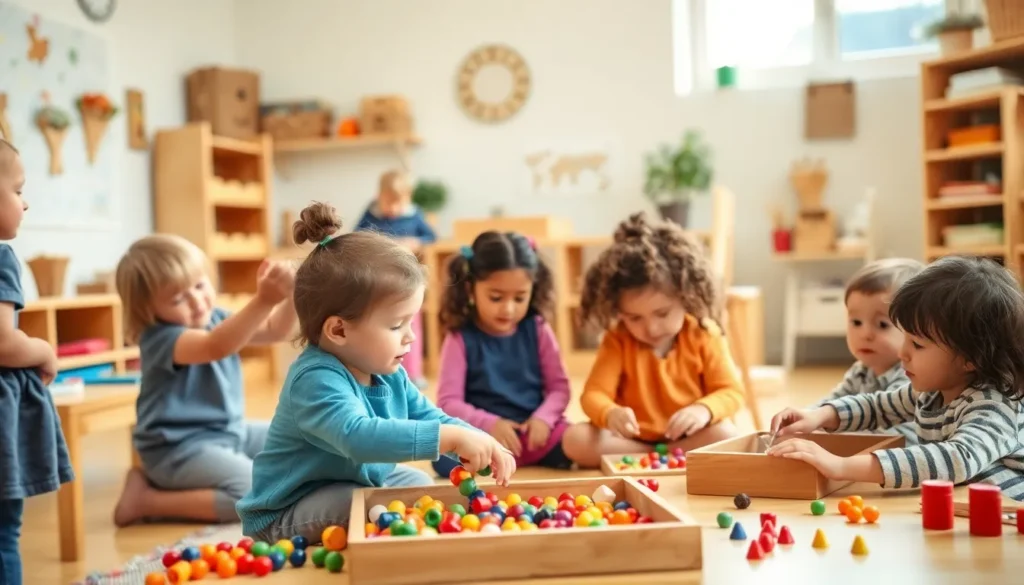
Montessori education is characterized by its focus on child-centered approaches and hands-on learning experiences. These principles guide the curriculum, setting a foundation for engaged and effective learning.
Child-Centered Learning
Child-centered learning prioritizes the interests and developmental stages of each child. It places students in control of their educational journey, encouraging them to explore topics that spark their curiosity. Montessori environments offer children options, allowing them to select activities that resonate with their individual learning styles. This autonomous learning process fosters independence and critical thinking. Teachers, acting as guides, provide support without directing the learning experience. Opportunities for self-discovery lead to deeper understanding and retention of knowledge.
Hands-On Activities
Hands-on activities enhance learning by engaging multiple senses and facilitating active participation. Montessori materials encourage exploration, which helps solidify concepts through experience rather than rote memorization. For instance, children manipulate counting beads to grasp mathematical principles, while sensorial activities refine their observation skills. These tangible experiences make abstract ideas more relatable and understandable. Active involvement promotes a love for learning and develops essential skills, such as problem-solving and creativity. Each interaction with materials reinforces concepts, ensuring effective learning outcomes.
Curriculum Components
The Montessori home school curriculum includes several essential components that nurture a child’s growth and learning. These components offer a balanced and holistic approach to education.
Practical Life Skills
Practical life skills encompass activities designed to foster independence. Tasks such as pouring, sweeping, and gardening promote self-discipline and fine motor development. Children learn to perform everyday tasks, gaining confidence while mastering essential skills. Through these activities, kids develop an understanding of responsibility and care for their environment. A child today engages with these tasks, setting the foundation for a lifetime of self-sufficiency and practical know-how.
Sensorial Materials
Sensorial materials refine a child’s senses and enhance observation abilities. Tools such as color tablets, sound boxes, and texture materials engage learners in exploration. Each material offers hands-on experiences that allow children to discern differences in color, sound, and texture. This sensory engagement deepens their understanding of the world around them. Children develop critical thinking skills as they sort and categorize various items, reinforcing their ability to observe details.
Language Development
Language development focuses on enhancing literacy and comprehension skills. Montessori incorporates tools like moveable alphabets, providing interactive language experiences. Children gain exposure to vocabulary and phonetics through hands-on activities, solidifying their grasp of language concepts. As they manipulate letters and form words, kids build foundational literacy skills. Activities encourage storytelling and communication, cultivating a love for reading and self-expression in young learners.
Mathematics Foundations
Mathematics foundations offer interactive materials that introduce numerical concepts. Counting beads, geometric shapes, and pattern blocks help children understand fundamental math principles. Each of these engaging tools allows for hands-on exploration, making abstract concepts tangible. Children learn to approach math with confidence as they manipulate materials to solve problems. This practical experience fosters a strong foundation in critical thinking and problem-solving strategies.
Cultural Studies
Cultural studies immerse children in diverse traditions and global perspectives. This component encourages an appreciation for different cultures, fostering empathy and understanding. Activities may include exploring maps, traditions, and various art forms. Engaging with cultural studies broadens children’s horizons and nurtures curiosity about the world. As they learn about different people and places, kids develop a sense of respect for diversity and inclusivity.
Implementing Montessori at Home
Implementing Montessori at home involves creating a supportive environment and selecting appropriate materials. This method enriches a child’s learning experience and encourages independence.
Creating a Montessori Environment
Fostering a Montessori environment requires careful consideration of space and organization. Designate specific areas for activities like practical life, sensorial work, language, and math. Use low, open shelving to display materials, making them accessible to children. Incorporate natural light and calming colors to enhance focus and comfort. Encourage movement by ensuring ample space for exploration and play. Adults should serve as facilitators who guide rather than direct. This approach nurtures a sense of responsibility, freedom, and curiosity within the child, promoting engagement with their surroundings.
Selecting Montessori Materials
Choosing Montessori materials plays a crucial role in effective learning. Focus on high-quality, child-sized items that encourage hands-on interaction. Select tools that align with developmental stages and interests, such as interactive math games or sensorial resources like texture boards and sound boxes. Emphasizing natural materials helps cultivate a connection with the environment. Variety in materials provides opportunities for exploration and creativity. It’s important to rotate materials regularly to maintain engagement and challenge. Each selection should promote independence and foster critical thinking skills, steering children toward self-discovery and joyful learning.
Benefits of Montessori Home Schooling
Montessori home schooling offers numerous advantages that cater to children’s development. Child-centered learning shapes every aspect, ensuring that each child’s interests direct their educational journey. Engaging materials encourage hands-on experiences, allowing children to explore concepts in an interactive way.
Independence thrives in Montessori environments. Practical life activities nurture self-discipline and build essential life skills. Tasks such as pouring and gardening foster a sense of accomplishment, promoting confidence in everyday capabilities.
Social skills develop through mixed-age interactions. Younger children benefit from learning alongside older peers, observing and absorbing knowledge. Older children reinforce their understanding by teaching, creating a collaborative learning atmosphere.
Adaptability defines the Montessori approach. Each learning plan evolves based on individual interests and developmental stages. Children navigate their education at their own pace, cultivating a lifelong love for learning.
Critical thinking and problem-solving skills emerge from the hands-on activities central to the curriculum. Exploring mathematical concepts with materials like counting beads solidifies understanding in a tangible way. Sensorial activities refine observation skills, enhancing overall cognitive development.
Cultural studies enrich children’s perspectives, promoting empathy and understanding of diverse traditions. This curriculum integrates global viewpoints, preparing children for an interconnected world.
Supportive home environments play a crucial role in the effectiveness of Montessori education. Structuring spaces for practical life, sensorial work, language, and math allows children to engage with learning materials easily. High-quality, accessible resources enhance creativity and foster joyful exploration in young learners.
Challenges and Considerations
Montessori home schooling presents unique challenges that families must navigate. Implementing a curriculum involves commitment and consistency to ensure effective learning. Parents may need to adapt their teaching strategies to fit their children’s individual learning styles. Structuring a home environment that parallels a Montessori setting can demand thoughtful organization and planning.
Selecting the right materials poses another significant consideration. High-quality, child-sized tools enhance interaction but can be costly. Budget constraints might limit choices, making it essential to prioritize essential resources and gradually build a comprehensive collection. Additionally, regularly rotating materials keeps the learning experience fresh and engaging.
Parental involvement becomes crucial in fostering autonomy. Children thrive when allowed to explore independently, but some parents may struggle with relinquishing control. Encouraging children to make choices promotes self-direction, yet it requires parents to resist the urge to intervene constantly.
Socialization remains a critical factor for home-schooled children. Opportunities for mixed-age interactions are vital for developing communication skills. Families should seek community groups or activities that align with homeschooling principles to facilitate peer engagement.
Monitoring progress without traditional metrics can be challenging. Parents might find it difficult to assess developmental milestones outside conventional grading systems. Regular reflection on children’s interests and accomplishments helps gauge their growth. Gathering feedback from peers and community can provide additional insights into a child’s learning journey.
Ultimately, balancing a Montessori home school curriculum with family dynamics requires careful consideration. Adapting to each child’s unique pace and fostering a love for learning enriches educational experiences. Managing challenges effectively enables parents to create a nurturing environment that supports their children’s curiosity and development.
The Montessori home school curriculum offers a unique and enriching approach to education that prioritizes a child’s natural curiosity and independence. By fostering an environment filled with hands-on activities and self-directed learning, children can explore subjects that resonate with them. This method not only nurtures essential skills like problem-solving and creativity but also emphasizes the importance of social interactions and cultural awareness.
Parents who embrace the Montessori philosophy can create a supportive and engaging atmosphere at home, allowing their children to thrive. With careful planning and thoughtful materials, the Montessori approach can transform a child’s educational journey into a joyful adventure filled with discovery and growth.