In a world where traditional education often feels like a game of “sit still and listen,” Montessori child development bursts onto the scene like a confetti cannon at a birthday party. This innovative approach encourages children to learn through exploration, fostering independence and creativity. Imagine a classroom where kids are not just passive recipients of knowledge but active participants in their own learning adventures. Sounds like a dream, right?
Overview of Montessori Child Development
Montessori child development focuses on fostering autonomy, creativity, and active participation in learning. Children thrive in environments rich with sensory experiences and hands-on materials. This approach encourages exploration, allowing them to engage with their surroundings and learn at their own pace.
Key principles guide the Montessori method. Respecting each child’s individuality supports varied learning styles. Careful observation of each child identifies unique interests and developmental needs. As they interact with educational materials, they sharpen critical thinking and problem-solving skills.
Social interaction plays a significant role in Montessori classrooms. Mixed-age groups facilitate peer learning, with older children teaching younger ones. Such dynamics nurture collaboration, empathy, and social responsibility. Children learn to navigate relationships, enhancing their communication skills.
Environment design is crucial within Montessori settings. Classrooms often include distinct areas for practical life skills, sensorial activities, language, mathematics, and cultural studies. Classroom organization promotes independence as children choose activities that interest them. This self-selection leads to increased motivation and engagement.
Curriculum flexibility also characterizes Montessori education. Teachers serve as guides rather than traditional instructors. They present materials and facilitate exploration without standard lectures. Children take ownership of their learning, allowing for deep understanding and retention of concepts.
Assessment differs from conventional strategies. Educators track progress through observations and portfolios instead of tests. This approach provides insight into children’s development and learning journeys. Each child’s growth path remains unique, promoting confidence and self-esteem.
Key Principles of Montessori Education
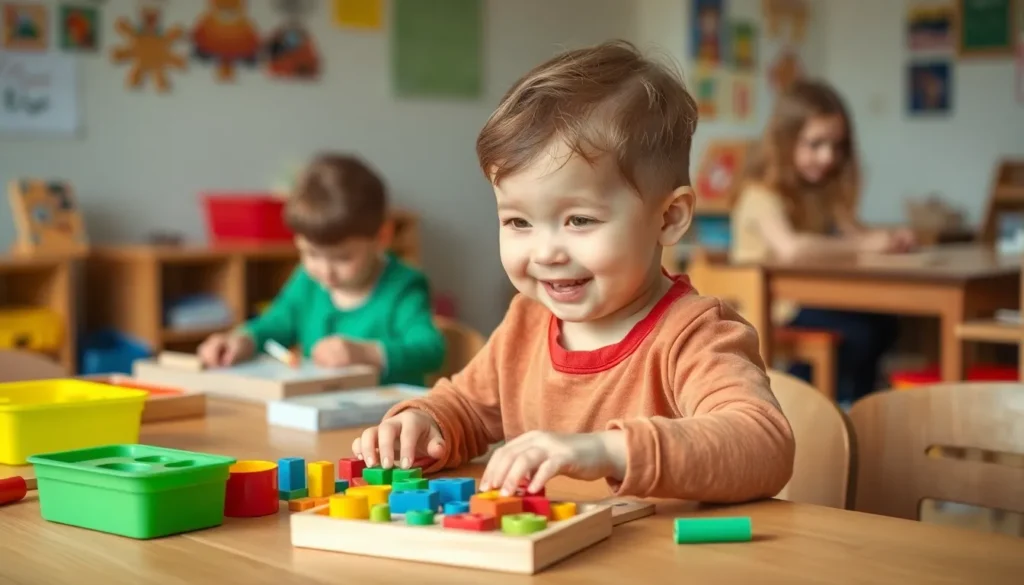
Montessori education is characterized by several key principles that enhance child development and learning.
Individualized Learning
Individualized learning is a core aspect of Montessori education. Each child receives instruction tailored to their unique needs. Teachers observe students to identify interests and learning styles, ensuring personalized experiences. This approach fosters autonomy, allowing children to direct their own learning journeys. Mixed-age classrooms create opportunities for peer teaching, reinforcing concepts as older students mentor younger ones. Adaptability in the curriculum accommodates varied paces of learning, promoting confidence and self-assuredness.
Hands-On Learning
Hands-on learning showcases the importance of sensory experiences in Montessori education. Children engage with concrete materials, facilitating better understanding of abstract concepts. Interactive tools support exploration and discovery, making learning tangible. Participation in activities enhances problem-solving skills and critical thinking. Through hands-on experiences, children develop fine motor skills and coordination. Classes emphasize real-world applications, making connections between lessons and practical life. This approach nurtures a love for learning as students experience joy in discovery and exploration.
Stages of Development in Montessori
Montessori education recognizes distinct stages of development, allowing children to thrive at their own pace. Each stage aligns with specific developmental needs.
Infant and Toddler Development
Infants and toddlers engage with their environment through exploration. They develop motor skills and sensory awareness by interacting with materials. At this stage, fostering independence is essential. Montessori classrooms offer safe spaces for children to move freely and make choices. Activities encourage exploration of everyday life skills, like dressing and feeding, which build confidence. Guided observation allows educators to tailor experiences that resonate with each child’s individual interests, ensuring they feel secure and valued.
Preschool Development
During preschool years, children’s language skills and social awareness expand significantly. They start to express themselves verbally and build relationships with peers. Montessori environments provide mixed-age interactions, allowing older children to mentor younger ones. Learning through play remains pivotal. Structured activities introduce concepts in math, language, and science. Children engage with hands-on materials that make abstract ideas tangible. Focus is placed on collaborative projects that foster problem-solving skills and promote a sense of community within the classroom.
Elementary Development
Elementary-aged children experience a shift in their learning approach, seeking more complex challenges. Their curiosity grows, prompting deeper investigations into various subjects. Montessori education nurtures this interest by offering interdisciplinary studies that connect different areas of knowledge. Children learn through research, experimentation, and presentations, allowing for creative expression. Independence is emphasized as they select projects based on personal interests. This method fosters responsibility and nurtures critical thinking, preparing them for future academic and social endeavors.
Benefits of Montessori Child Development
Montessori child development offers a variety of benefits that enhance children’s overall growth and learning experiences.
Emotional Growth
Emotional growth flourishes in Montessori environments. Children learn to express their feelings and understand others’ emotions through collaborative activities. Independent decision-making fosters self-confidence. As they navigate challenges, kids develop resilience and a positive self-image. Additionally, the nurturing atmosphere encourages children to embrace mistakes as part of their learning journey.
Social Skills
Social skills thrive in mixed-age classrooms. Peer interactions provide children opportunities to learn cooperation and empathy. Older children often mentor younger peers, reinforcing their own understanding. Sharing materials and ideas cultivates respect for others and enhances communication abilities. These interactions promote conflict resolution and patience, essential components of healthy social relationships.
Academic Advancement
Academic advancement occurs through hands-on learning experiences. Children engage with materials that promote self-directed exploration. This approach nurtures critical thinking and problem-solving abilities. As they explore subjects at their own pace, they deepen their understanding and retention. The integration of real-world applications makes learning relevant, encouraging a lifelong passion for knowledge.
Implementing Montessori in Home Settings
Creating a Montessori environment at home enhances child development. First, designate a specific area for learning, filled with age-appropriate materials. This setup encourages exploration and independence. Select toys and tools that focus on hands-on experiences, such as puzzles, blocks, and art supplies.
Incorporating practical life activities helps children develop essential skills. Tasks like cooking, gardening, and cleaning inside the home allow kids to engage with their surroundings. These activities build confidence and competence.
Establishing a predictable daily routine supports children’s learning. It offers them a sense of security and structure, allowing for a smooth transition between activities. Flexibility remains key, allowing children to explore their interests within the framework of the routine.
Fostering independence is essential in a Montessori home setting. Encourage children to make choices in their activities and handle tasks independently. This builds decision-making skills and promotes self-sufficiency.
Regular observation and assessment help identify children’s individual interests and developmental needs. Keeping track of their progress through notes or simple checklists can guide future learning experiences. Discussions with them about their pursuits deepen understanding and foster a love for learning.
Encourage family involvement in learning too. Include age-appropriate discussions during mealtime or engage in collaborative projects that promote teamwork and communication. Mixing family time with educational moments enhances the learning process while keeping it enjoyable.
Maintaining an organized space creates a calming atmosphere. An uncluttered environment promotes focus, allowing children to concentrate on their tasks. Aspect pairs within the home align with the principles of self-directed learning and respect for their autonomy.
Montessori child development offers a transformative approach to early education that prioritizes independence and creativity. By fostering a love for learning through hands-on experiences and social interactions, children gain essential skills that extend beyond the classroom. This method nurtures emotional and social growth while promoting critical thinking and problem-solving abilities.
Implementing Montessori principles at home can further enhance a child’s development, creating an environment that encourages exploration and autonomy. With the right resources and support, parents can cultivate a space where children thrive, preparing them for future challenges. Embracing the Montessori philosophy not only enriches a child’s educational journey but also lays the foundation for lifelong learning and personal growth.