For many coffee lovers, the perfect cup is a daily ritual that sets the tone for the day. Yet, achieving that ideal brew often hinges on one crucial factor: the coffee-to-water ratio. Too little coffee can result in a weak, uninspiring drink, while too much can lead to an overpowering bitterness. Finding the right balance is essential for unlocking the rich flavors and aromas that make coffee so enjoyable.
Understanding how much coffee to use per cup of water not only enhances the taste but also elevates the overall coffee experience. Whether you’re using a drip coffee maker, a French press, or an espresso machine, knowing the optimal measurements can transform your brewing game. In this article, we’ll explore the ideal ratios that cater to different brewing methods, helping anyone brew the perfect cup every time.
Understanding Coffee-to-Water Ratio
The coffee-to-water ratio plays a vital role in brewing quality coffee. Correct measurements can enhance taste and aroma, while incorrect ratios can negatively impact the experience.
The Basics of Brewing Coffee
Effective brewing requires knowledge of the coffee-to-water ratio. Standard guidelines suggest using 1 to 2 tablespoons of coffee for every 6 ounces of water. This translates to 1:16 to 1:8 ratios, respectively. Different brewing methods may adjust these ratios slightly. For example, espresso typically uses 1:2 to 1:3 ratios for a concentrated flavor, while a French press often employs 1:15 for a balanced cup. Understanding these basics allows for a tailored coffee experience.
Importance of Coffee-to-Water Ratio
The coffee-to-water ratio significantly affects flavor and strength. Too little coffee results in a weak brew lacking depth. Conversely, excessive coffee can lead to overpowering bitterness. For optimal flavor extraction, using the right ratio ensures pleasant acidity and body. A precise ratio caters to individual preferences, allowing adjustments for taste. Experimenting within suggested ranges enables drinkers to discover their perfect cup of coffee, enhancing satisfaction with each brew.
Recommended Ratios for Different Brewing Methods
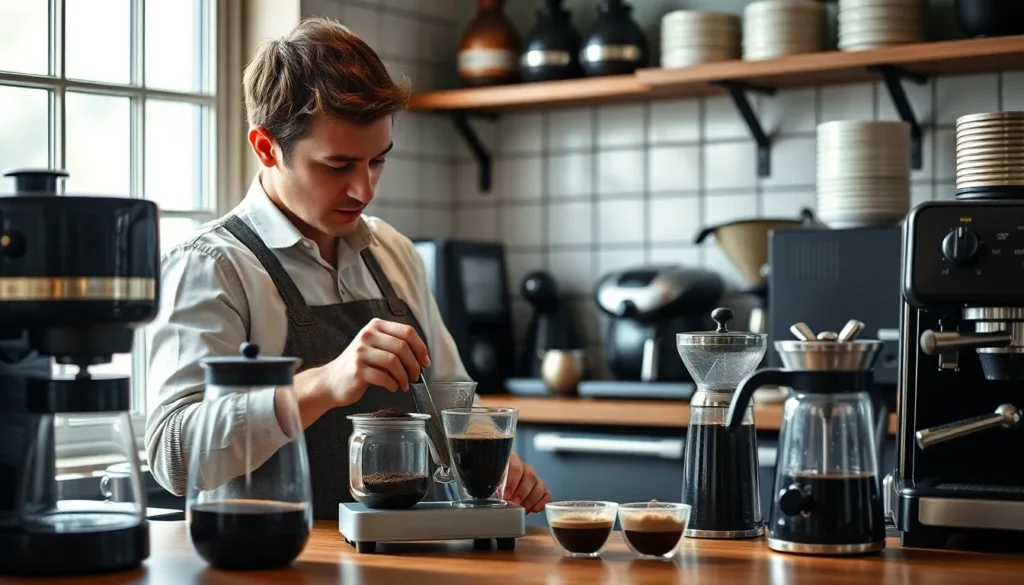
Understanding the recommended coffee-to-water ratios for various brewing methods ensures a flavorful experience. Each method has its specific guidelines for optimal results.
Drip Coffee Makers
For drip coffee makers, the ideal ratio ranges from 1:15 to 1:17. Using this ratio means approximately 1 to 2 tablespoons of coffee for every 6 ounces of water. A 1:16 ratio provides a balanced flavor profile, while a 1:15 ratio enhances strength. Adjusting based on personal taste can lead to a satisfying cup.
French Press
The French press typically employs a 1:15 to 1:17 ratio. This means 1 ounce or about 28 grams of coffee for every 15 ounces of water. By steeping coffee for 4 to 5 minutes, users can achieve full flavor extraction, resulting in a rich and robust cup. Experimenting within this range helps to fine-tune strength and taste preferences.
Espresso Machines
Espresso machines require a concentrated approach, with ratios often between 1:2 and 1:3. For instance, using 18-20 grams of coffee for a double shot of espresso, approximately 36-60 grams of water delivers a rich and intense taste. Maintaining pressure and extraction time becomes critical in this method, as it affects the final beverage’s flavor profile.
Factors Affecting Coffee Strength
Several elements influence the strength and flavor of coffee, including the coffee type, grind size, brewing time, and temperature. Understanding these factors helps create the ideal coffee experience.
Coffee Type and Grind Size
Different coffee types yield varied flavor profiles. Arabica beans often provide a smoother taste, while Robusta beans offer a stronger, more bitter flavor. The grind size also significantly impacts strength; finer grinds extract flavors quickly, leading to a stronger brew, while coarser grinds result in a milder cup. For optimal extraction, align grind size with the brewing method: a fine grind suits espresso, while a coarse grind benefits a French press.
Brewing Time and Temperature
Brewing time and temperature are crucial for flavor extraction. Generally, hotter water (195°F to 205°F) extracts flavors more effectively. Brewing durations vary by method; for example, espresso brews in about 25-30 seconds, while a French press requires 4 to 5 minutes. Under-extraction occurs with short brewing times and low temperatures, resulting in a sour taste. Over-extraction from excessive brewing or high temperatures leads to bitterness. Adjusting brewing time and temperature based on method enhances flavor strength and satisfaction.
Tips for Adjusting Coffee Strength
Adjusting the coffee strength involves experimenting with the coffee-to-water ratio and utilizing precise measuring tools. These practices help achieve the desired flavor profile and aroma for individual preferences.
How to Experiment with Ratios
- Start with the Standard Ratio: Begin with a common ratio, such as 1:16 coffee to water. Use this as a baseline to gauge the strength of the brew.
- Make Incremental Adjustments: Adjust the ratio gradually. Increase or decrease the amount of coffee by 1 tablespoon per 6 ounces of water to assess flavor changes.
- Record Observations: Keep a log of the ratios used and notes on flavor, aroma, and overall satisfaction. This documentation aids in fine-tuning preferences over time.
- Vary Brew Methods: Try different brewing methods, as each one may extract flavors differently. For instance, using a French press may call for a different ratio compared to espresso.
- Taste and Compare: Brew multiple cups with slight variations in ratios. Conduct side-by-side tastings to determine which ratios yield the most appealing results.
Tools to Measure Coffee and Water
- Kitchen Scale: Use a digital kitchen scale for precise measurements. Weigh coffee and water to ensure accuracy, especially when experimenting with ratios.
- Measuring Spoons and Cups: Standard measuring spoons and cups allow for straightforward measurements, ideal for quick adjustments.
- Graduated Cylinder: Consider a graduated cylinder for scoping out exact water volumes when precision is key.
- Coffee Maker with Integrated Scale: Some coffee makers feature built-in scales that simplify measurements, providing consistency every time.
- Brew Timer: Use a timer to track brewing times accurately. Control brewing durations to further refine strengths, especially for methods sensitive to steeping times.
Common Mistakes to Avoid
Brewing coffee requires precision, and common mistakes can lead to disappointing results. Avoiding these pitfalls can significantly improve the quality of coffee.
Over or Under Brewing
Over or under brewing negatively impacts flavor. Over-brewing, which occurs when coffee steeps too long, extracts excessive bitterness and astringency. Under-brewing, on the other hand, results in weak and sour flavors.
- Monitor Brewing Time: Follow recommended brewing times, such as 4 to 5 minutes for French presses and 20 to 30 seconds for espresso, to achieve optimal extraction.
- Adjust Accordingly: If coffee tastes too bitter, reduce the brew time. Conversely, extend the time slightly if coffee tastes sour or weak.
- Use Appropriate Ratios: Adhere to suggested coffee-to-water ratios, such as 1:16 for drip coffee, to maintain a balanced brew.
Ignoring Water Quality
Water quality significantly influences coffee flavor. Using tap water with impurities can introduce off-tastes that mask the coffee’s true aroma.
- Choose Filtered Water: Use filtered water to eliminate chlorine and other chemicals, enhancing flavor clarity.
- Maintain Proper Temperature: Ideal brewing temperature falls between 195°F and 205°F. Too hot or too cold water affects extraction rates negatively.
- Measure Total Dissolved Solids: Aim for water containing 150-250mg of total dissolved solids (TDS) for optimal results, as this affects flavor extraction and balance.
Finding the right coffee-to-water ratio is essential for brewing a satisfying cup of coffee. By understanding the guidelines provided for various methods, coffee enthusiasts can elevate their brewing skills. Experimenting within the recommended ranges allows individuals to discover their unique flavor preferences.
Attention to factors like grind size, brewing time, and water quality further enhances the coffee experience. With the right tools and a willingness to adjust ratios, anyone can craft the perfect cup tailored to their taste. Embracing this knowledge transforms coffee brewing from a routine task into an enjoyable art form.