Have you ever thought about how learning can shape a child’s future? If you’re looking for an educational approach that truly nurtures growth, then Montessori education might just be the golden ticket. Heritage Montessori School embodies this philosophy, creating a vibrant learning environment where curiosity thrives. In a world where traditional methods often feel rigid, the Montessori method offers a refreshing alternative, and it’s absolutely worth exploring with a sprinkle of humor along the way.
What Is Montessori Education?
The History and Philosophy of Montessori Method
Montessori education traces its roots back to the early 1900s when Dr. Maria Montessori, the first woman in Italy to earn a medical degree, developed a revolutionary approach to teaching. She focused on child-led learning, emphasizing that children learn best when they are free to explore their interests. This philosophy respects children as active participants in their education, rather than passive recipients of information. As the saying goes, ‘Give me a fish, and I eat for a day: teach me to fish, and I eat for a lifetime.’
Core Principles of Montessori Learning
At the heart of the Montessori method lies a few core principles: respect for the child, the importance of a prepared environment, and the significance of hands-on learning. Children are encouraged to make choices, fostering their autonomy. This hands-on approach allows them to engage with learning materials and concepts at their own pace, making education not just a task, but an adventure.
Benefits of Montessori Education for Children
Fostering Independence and Confidence
One of the most notable benefits of Montessori education is the emphasis on independence. Children are given choices in their activities, allowing them to take ownership of their learning journey. This fosters not only independence but also confidence. Imagine a child learning to tie their shoes, not through a drill but through exploration and trial. That sense of achievement? Priceless.
Holistic Development: Mind, Body, and Spirit
Montessori education nurtures a child’s holistic development. This method isn’t just about academics, it embraces emotional and social growth too. Children learn to collaborate with their peers, resolve conflicts, and develop empathy. It’s an all-around enhancement of mind, body, and spirit. The environment promotes physical activity alongside intellectual challenges, creating well-rounded individuals.
The Role of the Teacher in Montessori Education
Guiding Rather Than Directing
In a Montessori classroom, the teacher assumes the role of a guide rather than a traditional instructor. They observe and understand each child’s unique needs and interests. Rather than dictating what must be learned, they empower students to explore subjects that intrigue them. This guidance creates a richer learning experience, allowing children to investigate deeper into topics they are passionate about.
Creating a Prepared Environment
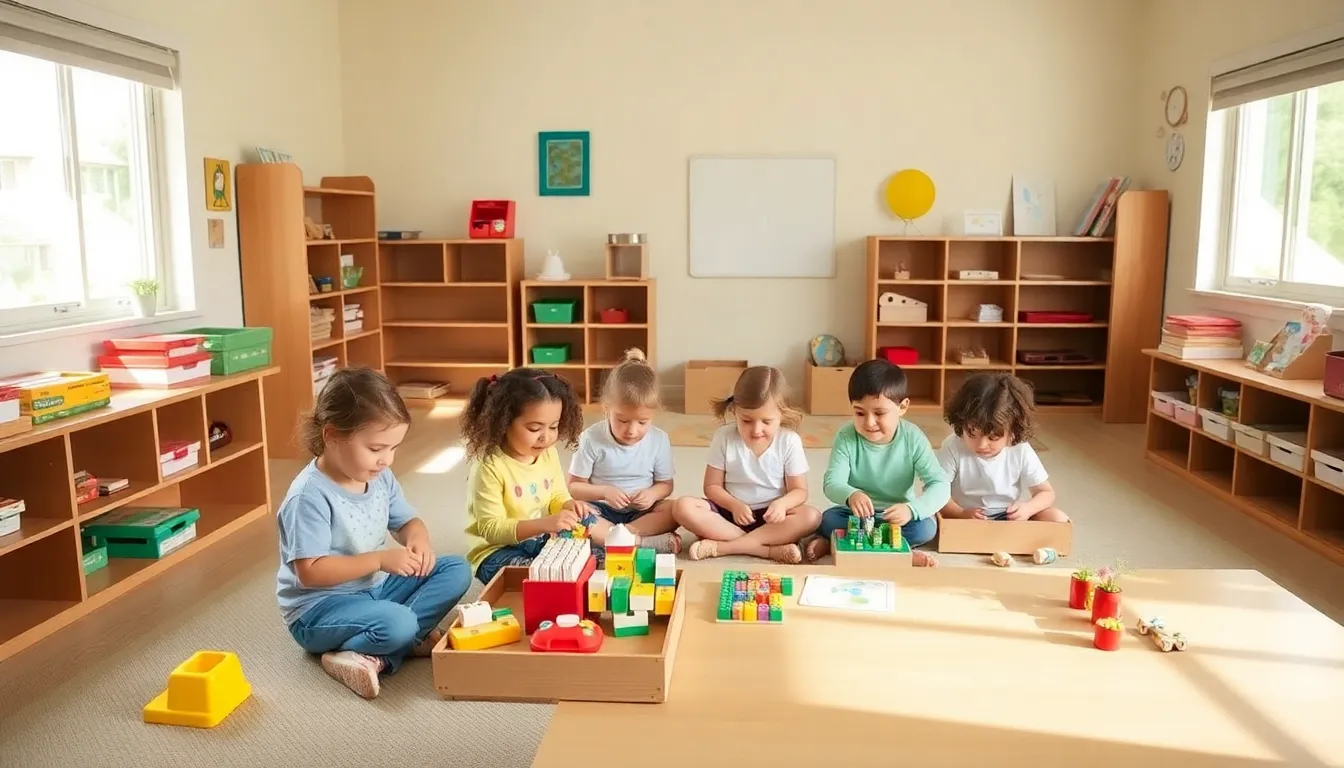
A crucial aspect of Montessori education is the prepared environment. This means classrooms are meticulously arranged to help exploration and discovery. Learning materials are accessible and appealing, inviting children to engage freely. A well-prepared environment acts as a silent teacher, guiding children toward independence and learning, all while keeping them excited about their educational journey.
Heritage Montessori School Overview
Curriculum and Program Offerings
Heritage Montessori School offers a rich curriculum tailored to each age group. Programs incorporate a variety of subjects, math, science, culture, and the arts, ensuring a comprehensive education. The school emphasizes hands-on learning, encouraging creativity and critical thinking. Whether it’s through gardening, art projects, or science experiments, every day provides a new opportunity for discovery.
Age Groups and Class Structure
Children at Heritage Montessori are grouped by age, but this isn’t just about a number. Mixed-age classrooms promote peer learning, where older children can mentor younger ones. This structure nurtures leadership skills and builds community within the classroom. Every class runs on the principle of inclusivity, allowing children to grow together at their own pace.
Extracurricular Activities and Community Involvement
Enrichment Programs and Events
At Heritage Montessori, learning extends beyond the classroom. The school hosts enrichment programs such as music, dance, and even coding. Special events foster a sense of community, from science fairs to cultural celebrations that allow families to engage in their children’s educational journeys. These activities are designed to amplify learning while building relationships among students and families.
Parent Involvement and Support
Heritage Montessori recognizes that parents are integral to a child’s education. The school encourages active parent involvement, offering workshops and volunteer opportunities. This partnership enhances the educational experience and ensures that home and school are aligned in fostering a supportive environment for children.